

Introduction
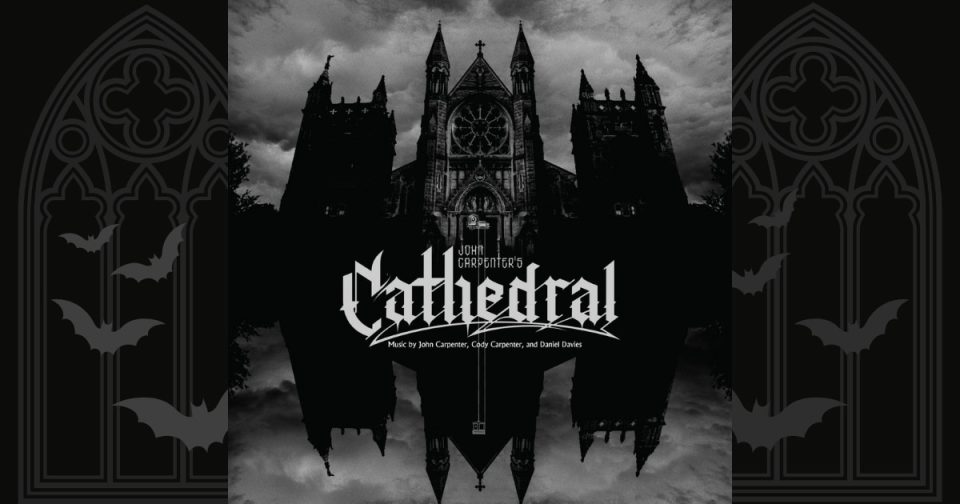
John Carpenter’s “Cathedral” released on August 4 of this year.
There are two things I like—maybe even love—when it comes to things outside of my family. Those things are horror movies and heavy metal.
I’m not going to get bogged down in what makes a good horror movie or a great metal album. That is way too subjective, and frankly, I’m not nearly interested enough in starting that argument. In both cases, however, I know what I like, and I know what I don’t like.
So when I heard that John Carpenter, along with his son Cody and godson Daniel Davies, were working on a “metal album,” I was beyond excited. I mean, there aren’t many things that get this 50-year-old excited anymore. These days, most of it revolves around my children not screwing up, staying healthy and becoming reasonably well-adjusted adults—and being able to take a good shit every now and then.
It’s the little things, you know?
I should also mention that keeping my wife happy and making sure that proverbial Eye of Sauron isn’t fixated directly on me are also pretty high on the list. So, needless to say, I was excited.
First Impressions
When the album was released, I decided to stream it first. I had the record sitting in my online cart at Sacred Bones, but I had just made a pretty substantial record purchase and couldn’t justify another one at the time. Even when it comes to John Carpenter, sometimes we have to tighten the old belt. What I heard was definitely John, Cody and Daniel, but it was different from the scores they had produced for the latest Halloween movies. It was also different from the Lost Themes albums that had been released over the years.
The first thing I wondered was whether I would actually call it “metal.” Honestly, I’m still not sure what I would classify it that way musically or genre-wise. Did it check some of the boxes that would make it metal? Absolutely. Did it remind me of their previous work? Again, absolutely.
And that’s where things get interesting.
After listening to the album multiple times, I decided to log on to the good ol’ Internet to find out about the production, inspirations and genesis of the music. Like many things associated with John Carpenter, it did not disappoint. I knew before that this project was tied to a comic book he had been working on.
While I have many notches in my nerd belt—and I say this with no disrespect—comics were not one of them. I grew up reading The Incredible Hulk, The Amazing Spider-Man and several other books, but I wouldn’t say I was a comic connoisseur. When I was originally looking at the record several months ago, I thought, “That’s neat,” but once I didn’t pull the trigger on the purchase, I went on to other, more immediate needs.

The Story Behind the Album
The story behind Cathedral is almost as interesting as the music itself. The project began with a dream John Carpenter had in 2024. In it, a detective discovers a human body that has been turned inside out, leading her to an abandoned cathedral in downtown Los Angeles. Beneath that cathedral is another hidden cathedral, where a supernatural entity waits in the darkness. As the body count rises, the detective is forced into a fight for survival.
That bizarre nightmare became the foundation for something much bigger than an album.
According to Apple Music, Carpenter told guitarist Daniel Davies about the dream, and Davies immediately recognized a familiar opportunity. Carpenter, his son Cody Carpenter, and Davies had already spent years creating the Lost Themes albums, essentially composing scores for movies that existed only in their imaginations. Cathedral took that idea one step further. This time, they had an actual story to work from.
Carpenter would describe a scene to the musicians, and they would compose the music as if they were scoring a movie. There was no footage, no finished script and no working print to watch. Instead, Carpenter’s descriptions became the images in their heads. Davies told Apple Music that Carpenter could describe something as simple as a battle sequence or a murder and immediately paint a picture for the musicians.
That approach also helped push the music in a heavier direction.
While the Lost Themes records have often been driven by Carpenter’s signature synthesizers, Cathedral puts considerably more emphasis on guitars and live drums. Davies told Apple Music that he felt less protective of the music being synth-driven, while Carpenter encouraged the trio to make things heavier and more driving. The imagery itself seemed to demand it: big drums, choirs and low-tuned guitars.
The result is an album that Sacred Bones Records describes as having the drama, dark atmosphere and frenetic pacing of a classic heavy metal record. Davies’ guitars take center stage on songs such as “Primeval,” “Elevator” and “Lord of the Underground,” while Carpenter and Cody’s synthesizers provide much of the ominous atmosphere on tracks including “Desolation in the Underworld.”
But there was still a movie in Carpenter’s head that needed somewhere to go.

After the music was recorded, Carpenter teamed with his wife, Sandy King, and writer Sean Sobczak to transform the original dream into a graphic novel published by Storm King Comics. The album then became the soundtrack to that graphic novel, with each song corresponding to a specific section of the story. The album’s liner notes even contain prompts for each track, allowing listeners to follow along with the story and use the music as an audio companion to the book.
That makes Cathedral something of a strange circle in Carpenter’s career. He started with a dream about a movie. He and his collaborators then composed the soundtrack to that imaginary movie. That music ultimately helped shape the graphic novel, which in turn gave the soundtrack a visual story to accompany.
And Carpenter still sees the music as capable of standing on its own.
As he explained to Apple Music, his preference is for people to buy the graphic novel, but doing so isn’t necessary to enjoy the album. The music works independently, although the complete experience gives listeners another way to enter Carpenter’s universe.
Sacred Bones sums up the concept by essentially asking listeners to do what Carpenter has always wanted audiences to do with his music: put it on and imagine you’re watching a movie. In that respect, Cathedral isn’t really a soundtrack looking for a movie. The movie, in a way, is already happening inside your head.
Final Thoughts
First, I’m not sure, if you are a metalhead, that you will instantly think of this album. It has metal elements and is probably as close to metal as John Carpenter will get with his music. That said, what has me most intrigued by Cathedral is how it goes with the graphic novel sharing the same name. I’m not a comic book guy or someone who knows a lot about them, but I want to read this story and then listen to the album. I really think this is a unique experience and one I want to have.
I also am hopeful that John Carpenter decides he wants to make a film and score it. I mean, I will take more, but I think he has one left in him. It is obvious that the creative juices are flowing and he still has something to say.
I, for one, am here to listen to whatever he has to say.

The Songs
Primeval: It instantly hits you with the Carpenter synth, but then Daniel Davies hits you with a wailing riff. Then the drums come in, and you are like, huh, what is this? I’m not sure I instantly get melt-your-face metal vibes, but it is different from what came before it.
Identity: This starts off very dark and heavy in tone. Imagine a King Diamond-like intro to a song, like “The Candle.” Then it brings in the slowness of a good doom song. Again, I don’t know if my mind is seeing this as metal, even though it has some very metal things going on.
Inside Out: This one you need to turn up the volume. One thing that JC and the boys got right was that this album needs to be listened to at high volumes. It chugs, it rattles and then has the quiet, melodic parts that you would expect. Again, my mind is finding it hard to call this metal, but at the same time, it can’t say it isn’t.
Abandoned Cathedral: This one gives me vibes of The Fog, and considering I dig that score, that isn’t a bad thing. It’s also short but sweet.
Elevator: This gives me vibes of a Trent Reznor jam. If someone had told me this was a Nine Inch Nails song, I could hear that. Again, this needs to be played loud. Let the pulsing beat take over.
Elevator Two: This is really different from “Elevator.” This sounds like it should be in a movie, and in a way, that makes sense, as it is the score to the graphic novel. To me, this was the least metal of what has come so far.
Desolation in the Underworld: This again sounds very atmospheric and like something of importance is happening in the story. But what, I don’t know.
The Mapmaker: The piano and the strings. Eerily beautiful. Metal? I don’t know, but much like the songs that have come before, I like it.
The Ferryman: This is low-end heavy. This one thumps.
Lord of the Underground: This is by far the most straight-up metal tune on this whole album. This could have been on Judas Priest’s Turbo album, and it would definitely work.
Death of the Mapmaker: I can only assume this is of some significance in the graphic novel. I get that cue from the music. It also is short and sweet.
Back to Ruins: The drums are the main driving force in this song.
Revenge: This is very guitar-forward and uptempo. The drums again are what are driving this, with the guitar moaning in the background.
Resolution: As is only fitting, the synth is the main part of this song.