
Overview
Her heritage is finally calling her home. What will she do to find belonging?
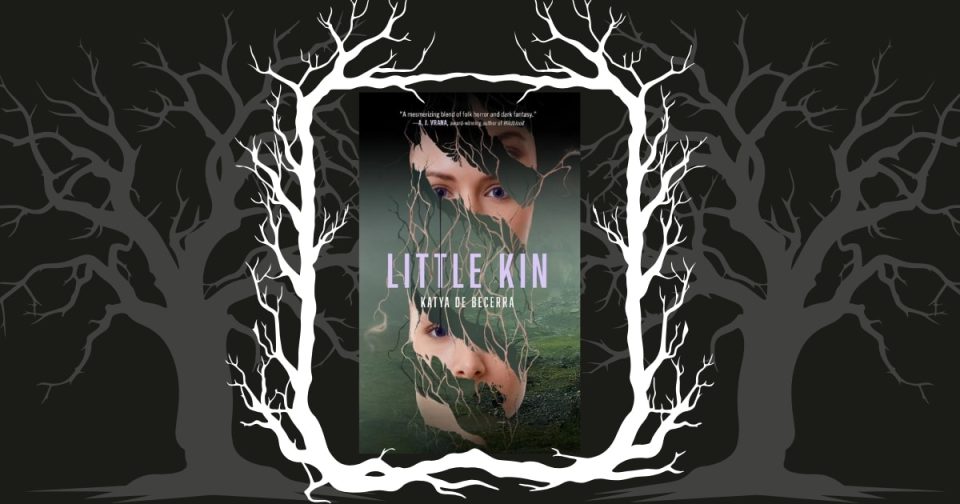
Little Kin by Katya de Becerra, which is set for release on September 22, 2026, follows the story of Cass, an anthropologist adopted at birth. With her adoptive mother long passed and her adoptive father declining mentally due to Alzheimer’s disease, Cass is surprised to learn that her aunt—a relative of one of her birth parents—has passed and left her house to Cass. The house is on an arctic island occupied by the insular Rothgi people.
Cass sets out to study the Rothgi and learn the truth about her birth parents, but finds that her family is not the only secret the island harbors. Will the island and its deep, ancient magic accept her? Or will her attempt to make her way home prove deadly?
Like any folk horror, it’s tempting to draw comparisons to Midsommar, but Katya de Becerra’s most recent novel more closely resembles Heresy (2024). Both pieces tackle themes of community, belonging, and the role of magic and folklore in them; however, Heresy takes a rather pessimistic view, whereas Little Kin seems to trend toward light and optimism. Little Kin is in a league of its own and a powerhouse of a novel.
The Writing Style
It’s rare to be able to describe a folk horror as “fun” or “escapist”, but Little Kin manages to earn those titles. Its writing style is warm and indulgent despite the often gruesome subject matter. The writing style is so pretty, in fact, that the occasional use of modern slang (de Becerra uses “low-key”—meaning “somewhat”—more than once, for example) is somewhat jarring and does a disservice to its otherwise immersive narrative. It seems out of character for 28-year-old Cass, who is otherwise introspective and bookish.
Counterintuitively, the novel would benefit from a bit of texture. (Almost) everyone mentioned is in their late 20s and 30s. The absence of others creates questions; where are the families? How are there only two living elderly people? A more complete, well-rounded society would raise the stakes. Otherwise, lean into the strangeness of everyone’s beauty without necessarily admiring it.
The Inspiration
Katya de Becerra depicts Rothagisht, the island, as darkly alluring, paying special attention to the smells and sounds as experienced by Cass. De Becerra has said in interviews that Rothagisht was inspired by a trip to the volcanic landscapes of Iceland and it certainly comes through in the lively presence of the island.

With its author’s cultural anthropology background, the kinds of questions posed in the novel are unsurprising. De Becerra implicitly wonders through narrative what kinds of knowledge are unknowable and unwritable. Cass faces many ethical and pragmatic dilemmas and clearly values her professional and intellectual pursuits, but grows to internalize community, belonging, and connection, even in the face of violence. Cass’s journey toward self discovery gives her many exciting chances to demonstrate her determination.
Final Thoughts
Little Kin grabs hold of its reader and guides them through an exciting, beautiful, and terrifying adventure. Although some of the modern phrasing breaks my immersion, I can’t necessarily fault a 21st century author for using occasional 21st century language. It’s such a small percentage of the total reading experience, I’m almost comfortable boiling it down to a personal gripe.
De Becerra has said publicly that Little Kin came to her in a particularly vivid dream and that she extrapolated the rest of the story from it. It certainly manifests in some of the structural and worldbuilding facets of the book, but the environment benefits from the otherworldly feelings de Becerra was almost certainly experiencing. Altogether, it’s a fun ride and a great opportunity to support a talented new(ish) author.